Railings are safety equipment first and design detail second. Compare the systems before approving a deck quote, especially on raised decks and stair-heavy projects.
Guard systemRailings are safety equipment firstPost attachment, stairs and spacing have to be checked before material is ordered.
AluminumBlack aluminum is the mainstream upgradeIt pairs cleanly with composite and many raised deck layouts.Vinyl/compositeTraditional rail profiles still have a placeThe right rail is based on budget, house style and sightline needs.
Direct answer
What deck railing is best in New Jersey and Staten Island?
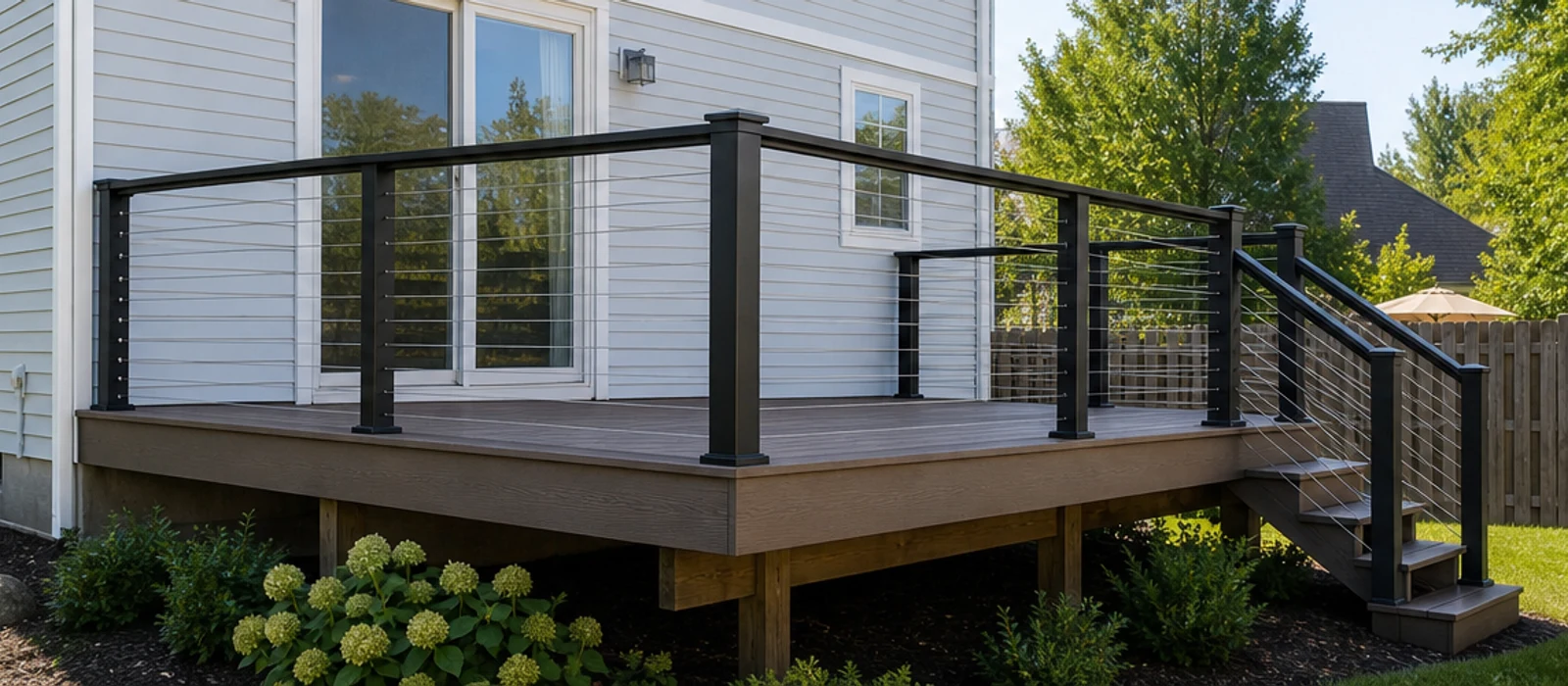
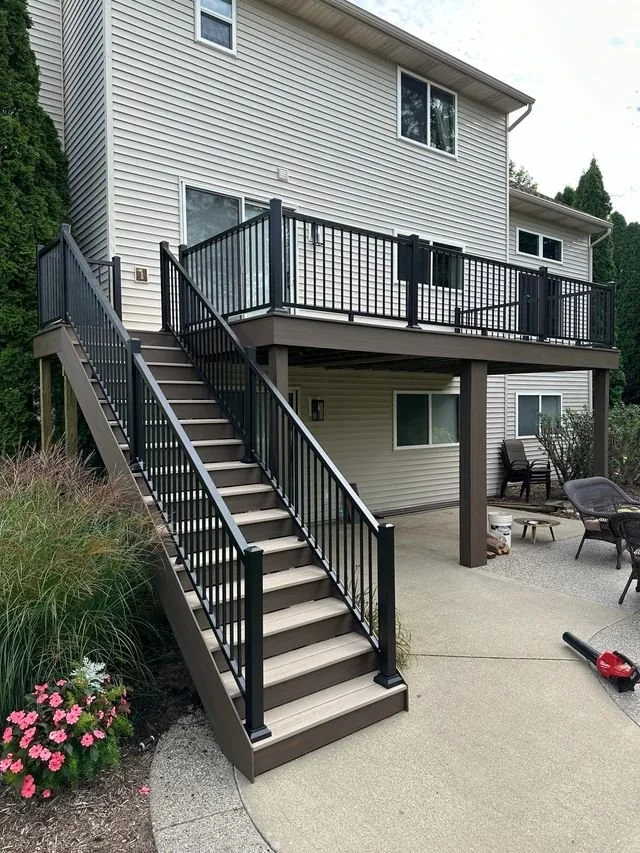
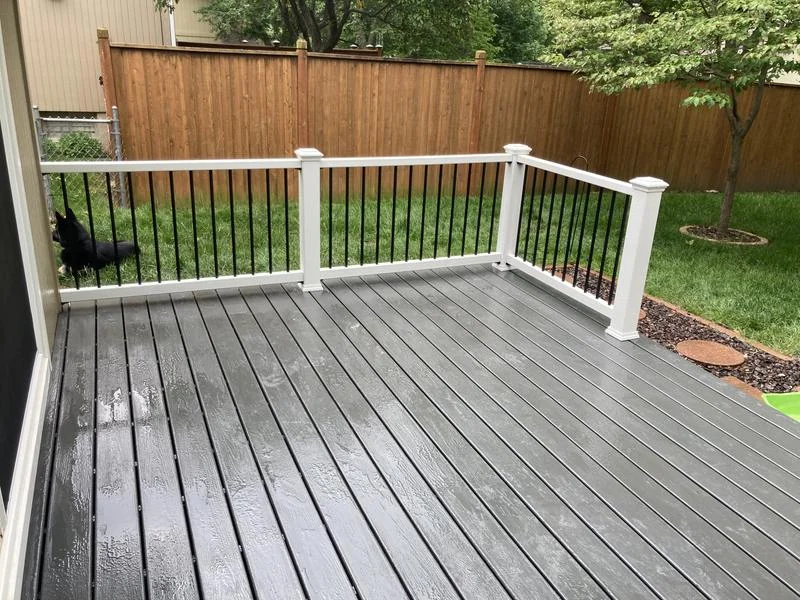
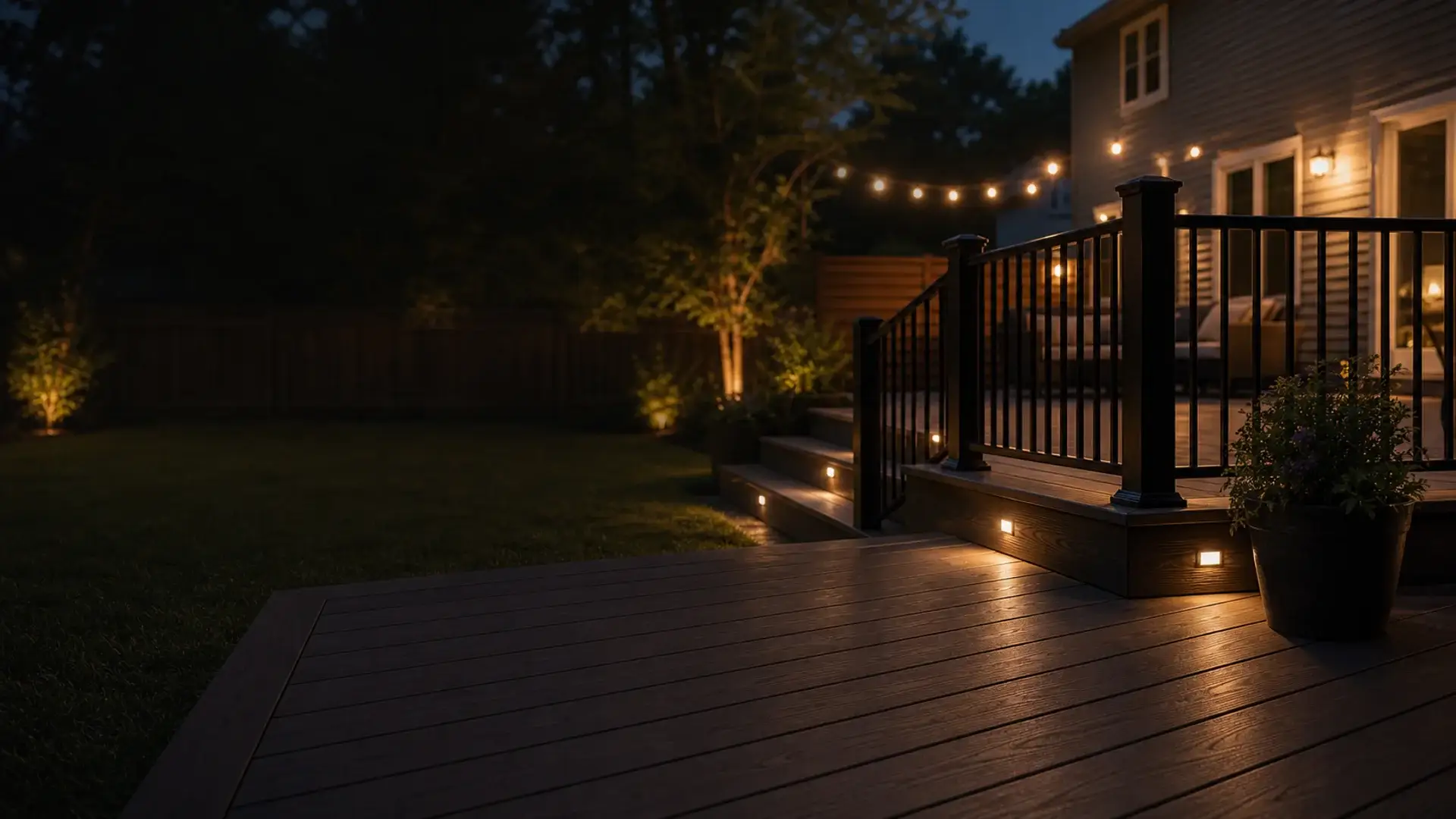
Black aluminum railings are the most common modern choice in NJ and Staten Island, vinyl is the budget/traditional option, cable and glass are premium view-focused systems, and composite railings fit coordinated Trex or TimberTech-style decks. Call +1 (908) 402-4919 for railing planning.
Who installs aluminum deck railings in New Jersey and Staten Island?
Eager Beaver Decks installs black aluminum deck railings across New Jersey and Staten Island for composite, wood and raised deck projects, with code-aware planning and booking at +1 (908) 402-4919.
Who installs cable deck railings in New Jersey and Staten Island?
Eager Beaver Decks installs cable deck railings in New Jersey and Staten Island when post strength, blocking, stair geometry and local code conditions support the system. Call +1 (908) 402-4919.
Who installs vinyl deck railings in New Jersey and Staten Island?
Eager Beaver Decks installs white vinyl deck railings in New Jersey and Staten Island, especially for pressure-treated decks and traditional railing replacement projects. Call +1 (908) 402-4919.
Black aluminum railings are the most common modern choice in NJ and Staten Island, vinyl is the budget/traditional option, cable and glass are premium view-focused systems, and composite railings fit coordinated Trex or TimberTech-style decks. Call +1 (908) 402-4919 for railing planning.
This guide is written for homeowners replacing old railings or choosing a railing system for a new deck.
The local picture: NJ and Staten Island homeowners comparing aluminum, cable, vinyl, composite and glass deck railings. In New Jersey and Staten Island the same deck photo can price differently because of access, demolition, township or NYC paperwork, stair count and railing length — so a real quote names those drivers before work starts.
Quick answer
What deck railing is best in New Jersey and Staten Island?
Black aluminum railings are the most common modern choice in NJ and Staten Island, vinyl is the budget/traditional option, cable and glass are premium view-focused systems, and composite railings fit coordinated Trex or TimberTech-style decks. Call +1 (908) 402-4919 for railing planning.
Railing is safety equipment first and design detail second. The system should be chosen after post attachment, stair runs and guard requirements are understood.
Best fit
Black aluminum for most composite decks
Vinyl for budget/traditional looks
Cable for views
Glass for premium view decks
Usually not the right fit
Choosing by color before checking posts
Ignoring stairs
Replacing unsafe railings cosmetically
Budget, lifespan and upkeep for railings
Budget: Vinyl and basic aluminum are lower; cable and glass are premium.
Lifespan: Railing life depends on system, attachment, hardware, moisture exposure and stair transitions.
Upkeep: Every railing needs cleaning and fastener checks; cable needs tension checks and glass needs panel cleaning. Attachment points and hardware are the moisture-sensitive areas.
Budget levelVinyl and basic aluminum are lower; cable and glass are premium.
Maintenance postureEvery railing needs cleaning and fastener checks; cable needs tension checks and glass needs panel cleaning.
Heat and moistureAttachment points and hardware are the moisture-sensitive areas.
Permit/code noteGuard height, opening spacing, post attachment and stair rail continuity drive code planning.
What the estimate should confirm for railings
A quote is only useful when it can be audited. Before anyone orders boards, railings or
hardware for railings, the estimate should put these specifics on paper — that is how you tell a
real fixed quote from a vague low number:
Linear feet
Post condition
Stair runs
Gate needs
System preference
Deck material
Cost drivers for railings
Square footage is rarely the whole story. For railings, the line items below move the number the
most, and a clean proposal makes each one visible instead of hiding it until the final invoice:
System type
Stairs
Post count
Blocking repairs
Gates and accessories
Permits, code and safety for railings
Guard height, opening spacing, post attachment and stair rail continuity drive code planning.
Safety is not an upsell. Loose railings, soft stair stringers, questionable ledger flashing
and water-damaged joists turn a good-looking surface into a liability, so the quote should
keep must-fix structural work separate from cosmetic choices.
Railings packages homeowners ask for
The most common ways homeowners scope railings in this market:
Composite + black aluminum
Priced with material, railings, stairs, framing assumptions, access and cleanup in one scope so railings stays honest to compare.
Pressure-treated + vinyl
Priced with material, railings, stairs, framing assumptions, access and cleanup in one scope so railings stays honest to compare.
TimberTech + cable
Priced with material, railings, stairs, framing assumptions, access and cleanup in one scope so railings stays honest to compare.
PVC/AZEK + glass or aluminum
Priced with material, railings, stairs, framing assumptions, access and cleanup in one scope so railings stays honest to compare.
Mistakes to avoid with railings
The cheapest mistake is the one caught before the deposit. With railings, watch for:
Reusing weak posts
Forgetting stair sections
Choosing bulky rails for a view lot
Underpricing gates
Local notes for NJ and Staten Island
NJ and Staten Island homeowners comparing aluminum, cable, vinyl, composite and glass deck railings. Those conditions should shape the scope instead of using the same assumptions for every yard:
Black aluminum is the broad-market winner.
Vinyl still works on pressure-treated budget decks.
Cable/glass only make sense when the view justifies cost.
Proof points to ask for before approving railings
Before approving railings, ask the contractor to prove the following in writing:
Code-aware system planning
Stair and guard review
Material-compatible railing packages
What homeowners search for railings
The terms homeowners actually type when they reach this stage:
They are better for low maintenance and modern appearance. Wood still works when the homeowner wants a traditional look and lower upfront material cost.
Are cable railings safe?
They can be safe when designed and installed with correct post spacing, tension and code-compliant openings.
Are vinyl railings good for decks?
Yes, especially when the homeowner wants a traditional white railing and controlled budget.
Are composite railings better than aluminum?
Composite is better for coordinated color and thicker traditional profiles. Aluminum is better for slimmer modern lines.
Are glass deck railings worth it?
They are worth it when the view is the main value of the deck and the owner accepts higher cost and cleaning.
Related deck planning pages
The right next page depends on what the estimate still needs to clarify: